
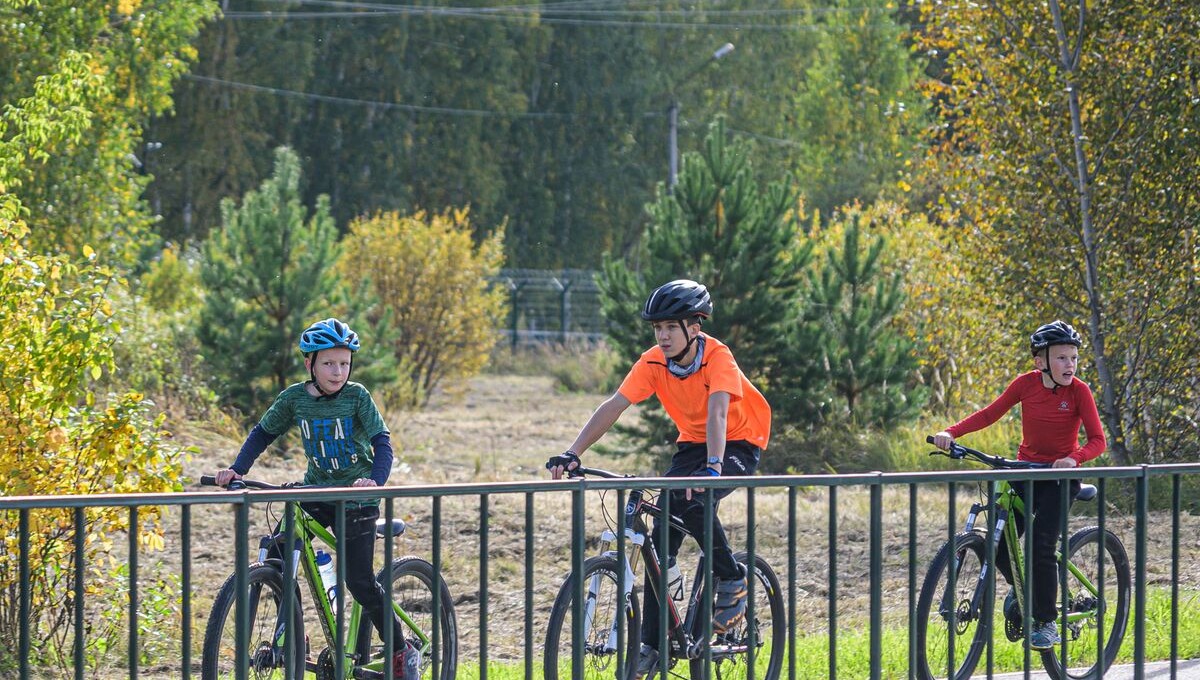
Bikes are one of the best things about caravan parks for kids - there's usually room to actually ride, other kids to tag along with, and it burns off the energy that builds up after a few hours in the back seat. It's also the setting for one of the more genuinely dangerous moments of a camping trip, and not the one most parents are watching for.
The danger that actually matters: reversing vehicles
Caravans and motorhomes have enormous blind spots, worse than almost anything else on the road, and caravan parks are full of them reversing into tight sites - often right on dusk when everyone's arriving and the light's getting flat. A driver backing a 6-metre van down a narrow site laneway often cannot see a child on a bike behind or beside it at all, and kids on bikes cover ground fast and unpredictably enough that "I saw them a second ago" isn't good enough.
Worth actually teaching kids, not just telling them once:
- Stop and watch before crossing behind any parked van or car, moving or not - reversing lights and beeping don't always mean they've seen you.
- Never ride close behind a vehicle that's backing up, even slowly. Give it space and wait it out.
- Make eye contact with the driver before crossing in front of a vehicle that looks like it's about to move.
- Treat every laneway like it has traffic, because check-in and check-out times mean it usually does.
Do kids need a helmet in a caravan park?
The honest legal answer: Australia's mandatory helmet laws apply to roads and road-related areas - footpaths, bike paths, bike lanes. A caravan park's internal roads are private property, so strictly speaking the state road rules may not apply there the way they do on a public street. That's a technicality worth knowing, not a reason to skip one. Almost every caravan park sets a helmet requirement as a condition of entry regardless of what the state road rules technically cover, and the actual risk - loose gravel, other bikes, reversing vehicles, kids racing each other - doesn't care whether the road is gazetted. Pack the helmets and treat them as non-negotiable, the same as you would anywhere else.
Where it's actually ok to ride
- Site roads and internal laneways, at walking pace, are generally fine and where most park riding happens.
- Camp kitchens, amenities blocks and boat ramp approaches are through-traffic areas for adults carrying dishes, food and gear - treat these as no-ride zones rather than shortcuts.
- Other people's sites aren't a thoroughfare. Cutting through someone's annex space to save twenty metres is a common source of real friction between campers.
- After dark, without lights, is a no - a bike is very hard to see against headlights and other vans' lighting once the sun's down.
- Check for a park-specific rule before assuming - some parks restrict bike hours, or ban riding altogether in tightly packed peak-season areas. It's usually on the site map or noted at check-in.
How old before they can ride around on their own?
There's no set rule here, and it depends more on the specific park than the child. A few things worth weighing rather than a fixed age: whether the park has a single loop road or a maze of laneways with blind corners, how much through-traffic it gets at changeover times, whether other kids are already out there to ride with, and whether your child actually stops and looks before crossing a laneway - not whether they've been told to. The buddy system (a sibling or camp friend) and a clear "these roads only" boundary do more real-world work than an age cutoff.
Bringing bikes along
A few practical things that make bikes worth bringing rather than a hassle:
- Match the bike to the trip, not just the kid. Balance bikes and trainer wheels are fine for site laneways; if you're planning longer rides on park or town bike paths, a properly sized pedal bike matters more. Don't leave 3 and 4-year-olds out of this either - a balance bike or trike small enough to keep them close and slow is still a genuine camp activity, not just something for the older kids.
- Carrying them. Bigger kids' bikes usually need a hitch-mounted rack, tow-ball-mounted rack or rear-door mount - the right one depends on what's already on your tow ball or rear door, and how many bikes you're carrying. Little kids' bikes, balance bikes and trikes are small enough to skip all of that - they'll usually fit in the boot of the tow vehicle or a storage bay in the caravan or campervan with no rack needed at all.
- Lock them up. Bikes go missing from busy caravan parks and showground stopovers more often than people expect. A cheap cable lock through the back wheel and frame, looped around something fixed, is a five-minute habit that beats an expensive replacement.
- Tyre pressure and a pump. Bikes that sit unused between trips lose pressure, and a soft tyre on day one is a common first-morning letdown.
Common questions
Are bikes allowed at every caravan park?
Most allow them, but not all, and some restrict where or when. Free camps and more remote sites are usually unrestricted; larger commercial parks are more likely to have specific rules, especially in peak season when site density is highest. Check the park's own site or ask at check-in if it matters to your trip.
Do I need a helmet if the park doesn't have a road rule sign posted?
Yes - a lack of signage isn't the same as it being unnecessary. Treat a helmet as standard kit regardless of what's posted, the same way you would riding anywhere else.
What's the single biggest risk to actually watch for?
Reversing caravans and motorhomes, especially around check-in and check-out times. It's a bigger real-world risk than most of what parents instinctively worry about (traffic speed, other kids, terrain), simply because the blind spots are so large and the timing is so predictable.
Bikes are one item on a longer list - see our caravan and RV packing checklist for everything else worth having sorted before a trip, our guide to footy, cricket and ball games at caravan parks for the same practical etiquette applied to a different kind of camp chaos, and magnet fishing if you're after another cheap, packable activity that keeps kids occupied at a riverside camp or bridge stop. See our full roundup of kids' camping activities for more.
Last updated September 2026.