
Disclosure: this guide contains affiliate links. If you buy through them, we may earn a small commission at no extra cost to you.
Magnet fishing is simple: you tie a powerful magnet to a rope, throw it into water, and pull out whatever metal it grabs on the way back. People have hauled up everything from bottle tops and hand tools to bikes, safes, shopping trolleys and the occasional piece of local history.
It has taken off fast in Australia over the last couple of years, and it is one of the easiest outdoor hobbies to start. There is no licence, the gear fits in a milk crate, and you can do it anywhere there is public water access — which makes it a good thing to have in the car on a road trip.
Why magnet fishing is a great hobby to start
If you want something to do with the kids at a riverside camp, or a way to fill an hour at a rest stop with a bridge, magnet fishing ticks a lot of boxes:
- Cheap to get into. One kit and you are ready. No rods, tackle or bait to keep buying.
- You clean up as you go. Every hook, sinker, can and bit of scrap you pull out is something that is no longer in the waterway.
- Genuinely family-friendly. Kids love the mystery-box feeling of not knowing what is on the end of the rope. Give them gloves and a job.
- No licence or season. Unlike line fishing, there is nothing to buy or register before you start.
- Works anywhere there is water. Bridges, jetties, boat ramps, town rivers, canals, swimming holes. If people gather near water, things end up in it.
- There is real history down there. Old crossings and working rivers hold tools, coins and relics that have been sitting there for decades.
- It packs down small. A magnet, a rope and a bag. Easy to keep in the caravan or ute for when you find good water.
It is also a forgiving hobby to be new at. Your first session you will mostly pull up nails and bottle caps, and that is still oddly satisfying.
What you actually need to get started
The gear list is short:
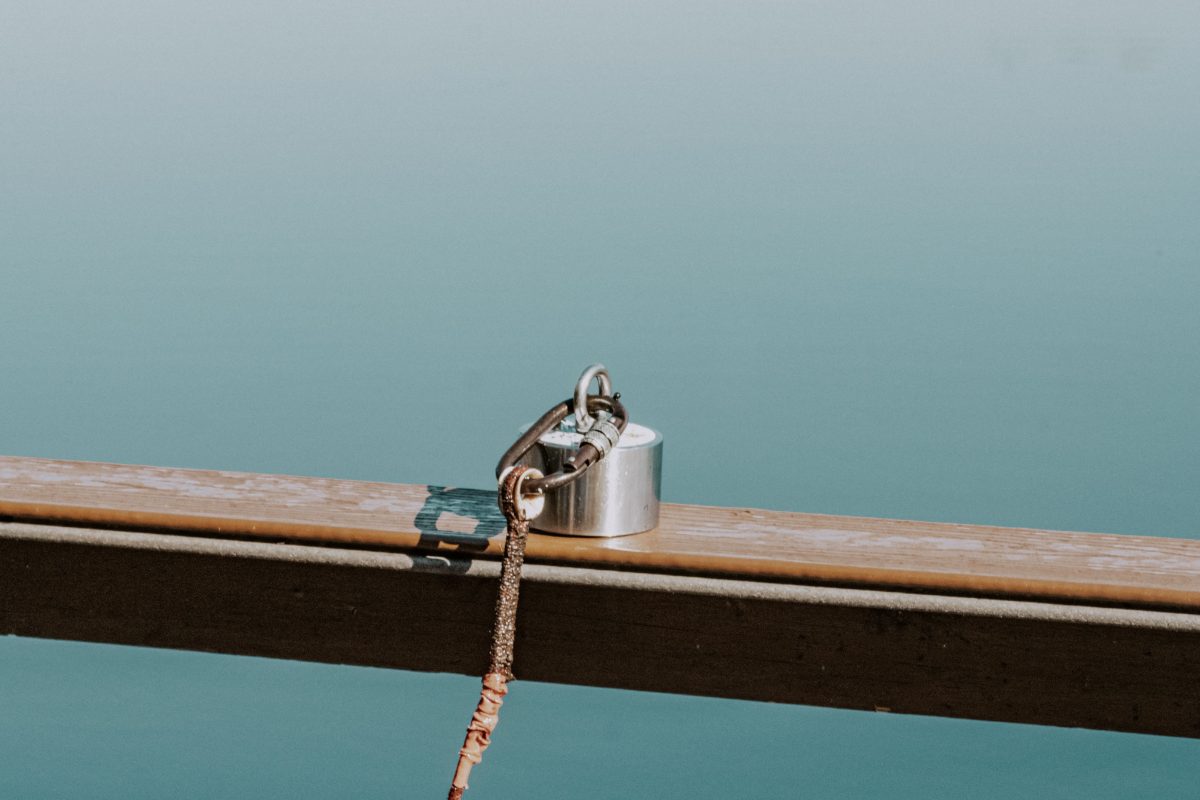
- A fishing magnet. A neodymium magnet in a steel shell with an eye bolt to tie onto. This is the one part worth not skimping on.
- Rope. Twenty metres is plenty for most spots, with a breaking strength well above your magnet’s pull rating. Braided rope is easier on the hands than cheap poly.
- A grappling hook. For dragging up non-magnetic finds and hooking your magnet back when it snags. You will use it more than you expect.
- Thread locker. A drop on the eye-bolt thread stops it unscrewing as the magnet spins on the rope. Losing a magnet on day one because the bolt backed out is a rite of passage worth skipping.
- Heavy gloves. Everything you pull up is wet, rusty and often sharp. Non-negotiable.
- A bag or tub. For the scrap, so it goes home with you and not back in the water.
You can buy these pieces separately, but for a first setup a complete kit is the easier call — the magnet, rope and hook are already matched to each other, so you are not guessing whether your rope can take the strain.
The kit we point beginners at is the Magnet Fishing Australians full kit. It is a 200 kg-per-side double-sided magnet (400 kg combined) with rope, a grappling hook and a carry case in the box, and it ships free within Australia.
The beginner setup
Magnet Fishing Australians Full Kit — $165
400 kg combined double-sided magnet, rope, grappling hook and carry case. Free shipping Australia-wide.
Shop the full kitSingle-sided or double-sided?
Magnets are sold by pull rating — the straight-line force needed to break the magnet off a flat steel plate. Real-world grab is always less than the number on the box, because finds are rusty, irregular and covered in muck.
- Single-sided magnets pull from one flat face. They are better for scanning down a vertical surface — bridge pilings, sheet piling, boat-ramp edges — where you want the face flat against the wall.
- Double-sided magnets grab from top and bottom, so they catch things as they drop and as you drag along the bottom. They are the more forgiving choice for open water and for beginners, which is why the kit above uses one.
A 200 kg-per-side double-sided magnet is a good place to start: strong enough to lift a bike frame, not so savage that it welds itself to every bridge you pass.
Grab a spare magnet before you go
Snagging a magnet on something you cannot move — and cutting the rope to walk away — happens to everyone eventually. If you are heading somewhere remote, or taking the kids so there are two ropes going, a spare in the bag saves the trip.
- 3 x 115 kg single-sided magnets — the cheapest way to keep backups, and light enough for kids to throw.
- 300 kg-per-side double-sided magnet — a step up in power for deeper or faster water.
- Single 115 kg magnet — a cheap second magnet to keep in the car.
How to magnet fish, step by step
1. Tie it on properly
Put a drop of thread locker on the eye-bolt thread and nip it up before you do anything else. Thread the rope through the eye and tie a knot that will not shake loose under load — a palomar or a figure-8 follow-through both work and are quick to learn. Test the whole rig with a hard pull on dry land.
2. Your first throw
Coil the loose rope at your feet so it pays out cleanly, and keep a foot on the end or tie it to something solid. Check nobody is behind or beside you — a 400 kg magnet on a rope is not something you want to clip a bystander with. Throw underarm, out and low. You do not need distance; most finds are close to the bank, the bridge or the ramp.
3. Work the spot
Let the magnet sink to the bottom, then draw it back slowly — slow enough that it stays down and has time to grab. Retrieve, take two steps along the bank, and cast again so you cover the area in a grid rather than dragging the same line every time. Around bridges, work tight to the pilings and the base of any ladder; at boat ramps, drag straight up the ramp itself. That is where dropped things collect.
4. When it snags
If the magnet locks onto something fixed, do not heave straight up while standing over it. Walk to one side and pull along the bank — the sideways angle slides the magnet off the edge of whatever it grabbed. Short, sharp tugs work better than one long haul. If it still will not come, a grappling hook on a second line can sometimes lever it free.
5. Landing a find
Gloves on before you touch anything. Lift wet finds out over the bank, not over your feet, and watch for fish hooks, broken glass and torn metal edges. Knock the magnet clean before you re-cast so it grabs at full strength.
What you will find, and what to do with it
A typical session is mostly nails, bottle tops, hooks, sinkers, tent pegs and unidentifiable rusted lumps, with the occasional knife, tool, coin or something heavier. Put the scrap in your bag and drop it at a scrap-metal recycler — most take mixed steel for free. Keep batteries, aerosols and anything electronic separate, and put those through proper hazardous-waste channels rather than the recycler bin.
If you pull up a weapon or anything that looks like ordnance
Firearms, knives and ammunition turn up in magnet fishing more often than you would think, and waterways near old military sites can hold live ordnance. If you bring up a firearm or a weapon, leave it where you can see it, do not take it home, and call the Police Assistance Line on 131 444 (or 000 if there is any immediate danger) for instructions. If something looks like a shell, a grenade or any kind of munition, do not move it at all — back away, keep others clear, note the exact spot and call 000. Let the experts handle it.
Is magnet fishing legal in Australia?
No law anywhere in Australia names magnet fishing, and it is generally treated as legal — it is hard to argue with a hobby that removes scrap metal from rivers. But several broader rules apply, and they are not the same in every state:
- Heritage protection. The Heritage Act 1977 (NSW) and equivalent state laws make it an offence to disturb or remove items of historical significance. The Commonwealth Underwater Cultural Heritage Act 2018 automatically protects anything that has been in Australian waters for 75 years or more. If a spot is heritage-listed — many old wharves, bridges and river precincts are — leave finds where they lie and move on.
- State and council rules. In NSW, access to some waterways and all heritage sites is restricted. In Victoria, magnet fishing in public water can fall under council approval for environmental reasons. In Queensland, disturbing aquatic habitat is regulated and some areas prohibit removing objects without permission. A quick check with the local council clears this up.
- Private and protected land. Do not magnet fish on private property, or in national parks, conservation areas or sanctuary zones, without permission from the landholder or managing authority.
- Dams and managed water. Water-supply reservoirs and irrigation channels are usually off limits — check with the operator.
The short version: it is legal, but the water you are standing next to is probably managed by someone. Check the specific spot before you throw.
Where to go magnet fishing in Australia
The best spots have one thing in common: years of people coming and going over water. Start with the location type, then find a public-access example near you.
- Road and foot bridges. Anywhere people cross water, things go over the side. Work the pilings.
- Jetties, piers and fishing platforms. Decades of dropped tackle, knives, phones and keys directly below.
- Boat ramps. Trailers, tools and gear get dropped on the ramp and slide straight down it.
- Town river walks and canal edges. Urban water with public paths and a long history of foot traffic.
- Old fords and crossings. Former routes that predate the current bridge often hold the oldest finds.
- Swimming holes and popular bank spots. Wherever people change near deep water.
Waterways Australian magnet fishers talk about include the Yarra River through Melbourne, the Brisbane River, the Swan River in Perth, Lake Burley Griffin in Canberra, and the smaller Mary River bridges between Maryborough and Hervey Bay. Urangan Pier is a well-known Queensland spot. Treat these as starting points: pick a stretch with legal public access and no heritage listing, and always leave the bank cleaner than you found it.
Magnet fishing on the road
This is a good hobby to travel with. The kit lives in a milk crate, it gives you something to do at a lunch stop with a bridge or a night at a riverside camp, and it fits the same leave-no-trace habit as using a dump point properly — you take out more than you brought in. If you are new to travelling this way, our dump point etiquette guide covers the same principle for the rest of your setup. See our full roundup of kids' camping activities for more ways to keep kids occupied at camp, including bikes and ball games.
Quick-start checklist
- Get a complete kit so the magnet, rope and hook are matched.
- Thread locker on the eye bolt; palomar or figure-8 knot; test on dry land.
- Heavy gloves on before you touch a find.
- Check the spot is public access and not heritage-listed.
- Throw underarm and low, retrieve slowly, work the area in a grid.
- Bag the scrap and drop it at a scrap-metal recycler.
- Weapon or ordnance: do not take it home — call 131 444, or 000 if in doubt.
Last updated September 2026.